Why Land Prices in Vrindavan Keep Rising: Five Forces Behind the Trend
Vrindavan land appreciation explained through five sourced forces: pilgrim numbers, the expressway and airport, public projects, scarce buildable land and NRI demand.
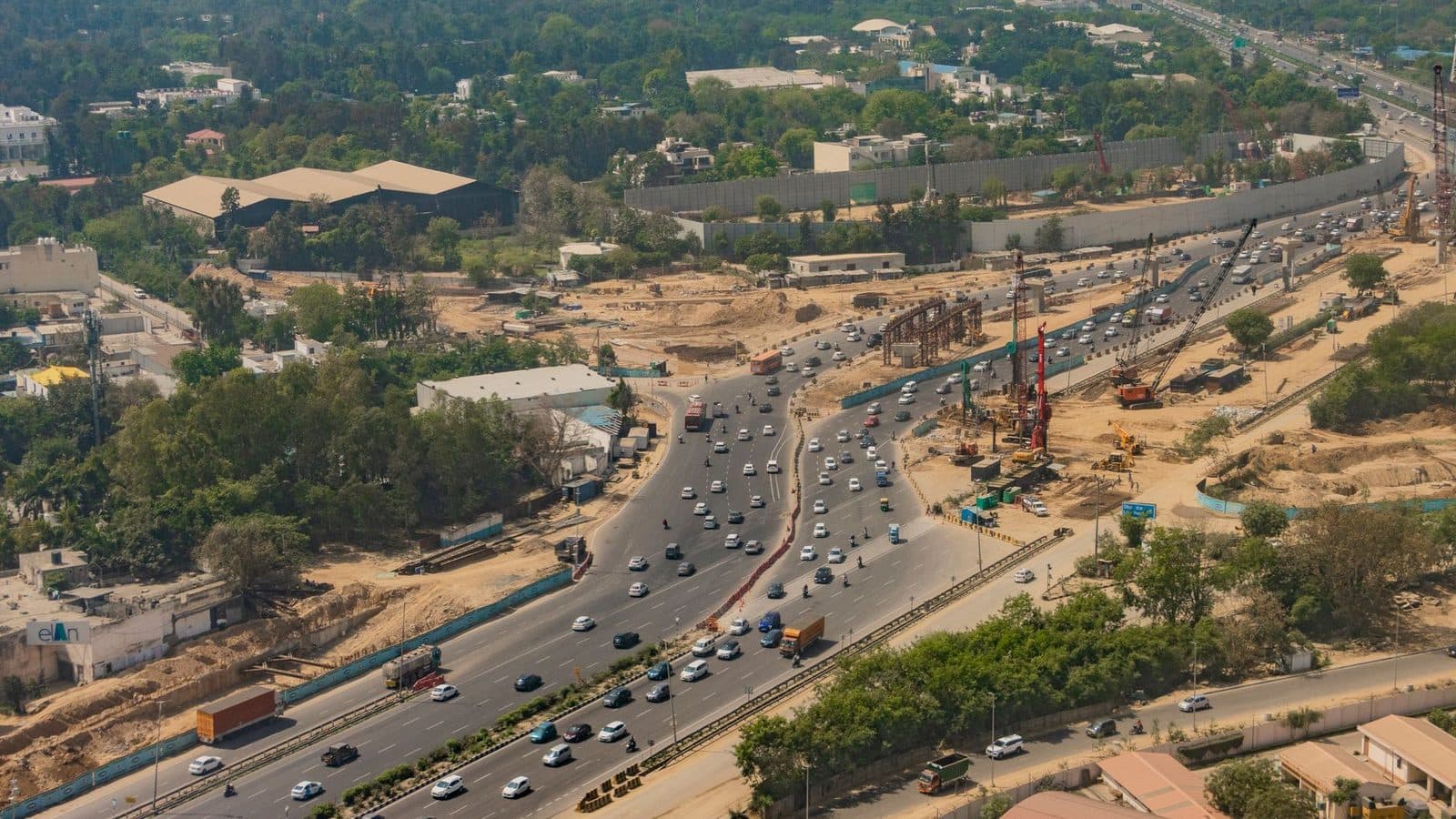
Photo: Shantum Singh / Pexels
Vrindavan land appreciation is not a mystery and it is not magic. Two independent reports in the last year, Business Today in December 2025 and Outlook Money in May 2026, both describe land values in prime pockets rising roughly three-fold over five years, with Business Today adding an 8.2 per cent year-on-year rise in average residential prices to the September 2025 quarter. Five forces explain that, and understanding them tells you which plots will keep benefiting and which are riding on a brochure.
Force one: pilgrim numbers that grow every year
Everything in Vrindavan's economy starts with the person who arrives for darshan. UP Tourism data reported 9,00,81,788 visitors to Mathura district in 2024, up from 7,79,27,299 in 2023, an increase of more than 1.2 crore in a single year. The Banke Bihari temple alone, according to figures cited in the Supreme Court proceedings, sees 30,000 to 40,000 people on an ordinary day, about 1.5 lakh on weekends and up to 5 lakh on festival days.
Every one of those visitors needs a road, a parking space, a meal, and often a room. That demand pulls hotels, dharamshalas, guesthouses and shops outward from the temple belt along Chhatikara Road, Sunrakh Road and the Mathura road. Commercial land follows footfall, and residential land follows commercial land. It is the oldest pattern in any pilgrim town, and it is running faster here than it has in living memory.
Force two: the expressway, and now an airport
Before August 2012, Delhi to Mathura meant the old NH-2 through Faridabad and Palwal. The 165.5 km Yamuna Expressway, opened on 9 August 2012 at a cost of about Rs 12,839 crore, changed Vrindavan from a day trip into a weekend. Six lanes, access-controlled, Greater Noida to Agra with the Mathura interchange on the way.
The second connectivity shift is newer. Noida International Airport at Jewar began commercial flights on 15 June 2026, with IndiGo, Akasa Air and Air India Express as the first carriers and a Phase 1 capacity of around 12 million passengers a year. The airport sits beside the Yamuna Expressway. For a family in Bengaluru or Hyderabad, or an NRI landing from the Gulf, Braj is now a flight and a straight drive down the expressway rather than a crossing of Delhi. We look at what this means in practice in Yamuna Expressway to Vrindavan.
Connectivity gains are real but they are also priced in quickly. The expressway premium was absorbed years ago; the airport premium is being absorbed now.
Force three: public money, led by the corridor
Business Today puts the broader development programme for Vrindavan at an estimated outlay of around Rs 30,000 crore. The most visible piece is the Shri Banke Bihari corridor. The Supreme Court cleared the plan on 15 May 2025, allowing land purchase for a corridor of about five acres from the Yamuna bank to the temple, with the state undertaking to spend more than Rs 500 crore and a stated aim of holding up to 50,000 visitors at a time.
Progress on the ground is slower than the headlines. Vrindavan Today reported in May 2026 that around 273 buildings fall within the 4.74 acre acquisition zone and that only 14 registrations, covering 1,386 square metres, had been completed in ten months. We cover the timeline and litigation in Banke Bihari corridor: what it means for property buyers.
The lesson for land prices: announcements move sentiment across the whole town; construction moves prices in the specific streets it touches. Plots that benefit from the corridor are the ones on the access routes and in the areas where displaced residents and shopkeepers are being resettled, not every plot with "corridor" in the brochure.
Force four: land you can legally build on is scarce
This is the force most buyers underestimate, and it is the one that makes Vrindavan different from a suburb of Noida where land can be released endlessly.
On one side is the river. In early 2025 the Central Water Commission notified the Yamuna floodplain, and at Mathura it runs 4.65 km on the left bank and 3.71 km on the right, based on a hundred years of flood data. New construction inside that zone is prohibited. Colonies that already sit inside it carry a risk that no approval can remove.
On the other side is the heritage core, a dense old town of temples, kunjs and narrow lanes that cannot be redeveloped at scale and that most people would not want redeveloped.
So supply of approved residential land comes from a ring of outer villages, and even that ring is regulated. In September 2026 the MVDA board approved a proposal to bring 93 more villages from Govardhan, Chhata and Sadar tehsils under its planning control, and cleared the layout for a 117 hectare township at Chhata. That is the authority acknowledging that demand has outrun the planned area. It also means approvals, not acreage, are the scarce resource. An approved plot is worth more each year in part because the pool of approvable land is finite, which is why we say check MVDA approval before you look at anything else.
Force five: demand that does not switch off
Outlook Money's May 2026 report notes that NRI buyers, long focused on Mumbai, Delhi-NCR, Bengaluru and Hyderabad, are now looking at spiritual destinations, and describes Vrindavan–Mathura as a demand-led second-home market driven by end use rather than speculation.
We see this at every site visit. A retired couple from Gujarat, a software family from Noida, a second-generation NRI buying for parents: none of them is checking the repo rate. They want a Braj address for reasons that will still be true in twenty years. That gives the market a floor that a pure investment destination does not have, and it explains why price corrections here have historically been shallow and short.
What the circle-rate revision tells you
In November 2025 the district raised circle rates by about 10 per cent in urban residential areas and around 5 per cent in rural ones. The ISKCON temple area went from Rs 60,000 to Rs 75,000 per square metre. The same report noted that actual land prices in urban areas run up to ten times the circle rate.
Two readings are possible, and both are true. First, the government is confirming, on paper, what registries have shown for years. Second, a large share of the "appreciation" you read about is the market being recorded at closer to its real level. When comparing a 2021 price to a 2026 price, remember that part of the gap is disclosure, not growth.
Where the forces are weakest
Honesty requires saying where the trend does not reach.
- Unapproved colonies benefit from sentiment on the way up and are the first to freeze when enforcement tightens. MVDA publishes lists of them.
- Floodplain plots carry a construction ban that no future road can lift.
- Land far from any of the five forces, a field with a hoarding on a village road with no sanctioned layout, is farmland at a Vrindavan price.
- Timelines. Every public project here has taken longer than announced. Buy on what exists, not on what is promised.
What this means for you
The forces behind Vrindavan land appreciation are structural: a growing pilgrim count, a finished expressway and a working airport, public money that is already committed, a hard limit on buildable land, and buyers who are not speculating. That is a better foundation than most Indian land markets can claim. It does not make every plot a good buy. Choose an approved layout outside the floodplain, on a road that already exists, at a price you have checked against dated public figures, and hold it for the years you were going to hold it anyway. Our layouts are listed at /projects with approval status stated for each, and we are glad to talk you through any of this on a site visit.
Frequently asked questions
How much have land prices in Vrindavan increased?+
Two independent reports point the same way. Business Today, citing portal data in December 2025, put average residential prices up 8.2 per cent year-on-year and land values in prime pockets up more than three times over five years. Outlook Money in May 2026 also described roughly three-fold appreciation in five years. Growth is uneven: temple-belt plots moved far more than interior ones.
What is driving Vrindavan land appreciation?+
Five forces working together: pilgrim numbers that rose to more than nine crore district visitors in 2024; the Yamuna Expressway and, since June 2026, commercial flights at Noida International Airport; public projects such as the Banke Bihari corridor; a shortage of land that can legally be built on, because of the floodplain and the heritage core; and steady demand from NRI and devotee families that is not interest-rate driven.
Is the Banke Bihari corridor already affecting property prices?+
Expectation is priced in faster than construction. The Supreme Court cleared the plan in May 2025 and a management committee was set up in August 2025, but by May 2026 only 14 of roughly 273 properties in the 4.74 acre zone had been registered for acquisition. Prices around the temple have responded to the announcement; the physical change is still years away.
Why is there so little developable land in Vrindavan?+
The town is squeezed between the Yamuna and its old core. The Central Water Commission demarcated the floodplain at Mathura at 4.65 km on the left bank and 3.71 km on the right, and new construction inside it is prohibited. The heritage core cannot be redeveloped at scale. New approved layouts therefore sit on the outer roads, and MVDA is expanding its planning area to bring 93 more villages under control.
Will Vrindavan land prices keep rising?+
Nobody can promise that. The forces behind the rise are real and mostly structural, but they were also present when prices were flat for stretches before 2012. Circle rates still sit far below market prices, which means part of the reported gain is catch-up rather than new value. Buy for a five-to-ten-year hold in an approved layout, and treat annual appreciation as a bonus, not a plan.
Sources
- Business Today — Ayodhya or Vrindavan real estate: which location can deliver better returns (18 Dec 2025)
- Outlook Money — Ayodhya to Vrindavan: why India's spiritual destinations are becoming property hotspots (17 May 2026)
- Travel Heights — 65 crore tourists visited Uttar Pradesh in 2024 (UP Tourism data, 28 Jan 2025)
- Wikipedia — Yamuna Expressway
- Wego — Noida International Airport opens for commercial flights (15–23 Jun 2026)
- The Tribune — Supreme Court paves way for Shri Banke Bihari temple corridor in Vrindavan (May 2025)
- Vrindavan Today — Registry process slows progress of Banke Bihari corridor project (23 May 2026)
- Vrindavan Today — Yamuna floodplain demarcated finally (4 Feb 2025)
- Amar Ujala — MVDA's jurisdiction to expand: 93 villages, 110th board meeting (19 Sep 2026)
- Amar Ujala — Mathura-Vrindavan circle rates increased by more than 10% (10 Nov 2025)
vrindavanlandappreciationinvestmentinfrastructure