Agricultural Land vs Approved Residential Plot in Mathura: The Difference That Matters
Why agricultural land conversion in Uttar Pradesh matters: what Section 80 (old 143) does, why cheap farmland is not a plot, and what approval gives you.
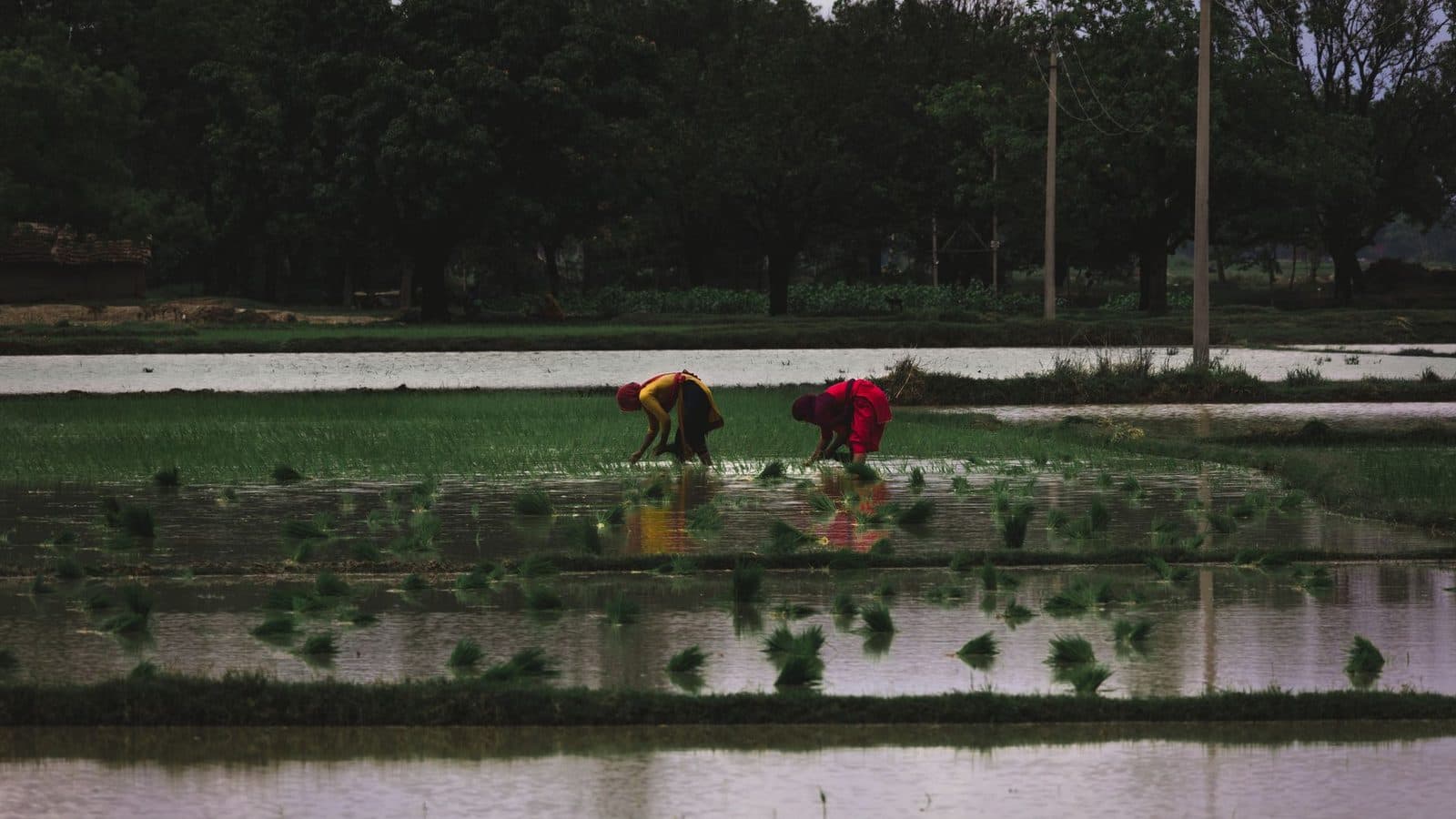
Photo: Nikhil Kumar Pal / Pexels
Agricultural land conversion in Uttar Pradesh is the step that turns a field into land you may legally build a house on, and in Mathura district it is the step most cheap "plots" have skipped. A parcel recorded as agricultural in the khatauni stays agricultural until the Sub-Divisional Officer declares otherwise under Section 80 of the UP Revenue Code 2006, the successor to the old Section 143. Without that declaration and a sanctioned layout on top of it, you have bought farmland, whatever the brochure says.
What "143" meant and what "Section 80" means now
For decades, landholders in UP talked about "getting 143 done". Section 143 of the UP Zamindari Abolition and Land Reforms Act 1950 provided that where a bhumidhar with transferable rights "uses his holding or part thereof for a purpose not connected with agriculture, horticulture or animal husbandry", the Assistant Collector could, after enquiry, make a declaration to that effect. Once declared, the land left the agricultural tenancy framework: the special rules on inheritance and transfer of agricultural holdings no longer applied, and the land devolved under the owner's personal law like any other property.
The 1950 Act was replaced by the UP Revenue Code 2006, and the same power now sits in Section 80. The words changed slightly; the idea did not. Locals still say 143, revenue officers write 80, and buyers should understand both refer to the declaration that takes land out of agricultural use.
How the Section 80 process works
From the text of Section 80 and the practice around it:
- Who applies. The bhumidhar with transferable rights, that is the recorded owner, applies to the Sub-Divisional Officer of the tehsil. If the parcel has several co-owners, all must apply together unless their shares have been legally partitioned.
- What is examined. A prescribed enquiry, in practice a lekhpal's site report endorsed by the tehsildar, confirms the location, the actual or proposed use, and whether any restriction applies (for example, additional permissions for land held by Scheduled Caste holders).
- Timeline. The SDO must decide within 45 working days of a complete application. Delays happen when the record is unclear or objections arise.
- Two kinds of declaration. Sub-section (1) covers land already in non-agricultural use. Sub-section (2) covers land declared suitable for a proposed industrial, commercial or residential purpose; the Code says this second kind "shall not amount to change of land use and the land shall continue to be treated as agricultural land", though it helps the owner obtain loans and permissions. If the proposed activity does not begin within five years, the sub-section (2) declaration lapses; once the activity begins, it can be converted to a sub-section (1) declaration, which the SDO must decide within 15 days.
- Fees. The state sets the fee scale by purpose; the Code exempts declarations for a person's own residential use from any fee. Guides describe the processing charges as nominal, and applications have been accepted online through the Board of Revenue portal since 2023.
The buyer's lesson from step 4 is important: a seller who shows you a "143" may be showing a suitability declaration, not an actual change of use. Read which sub-section it was made under.
Why Section 80 alone does not make a plot
Conversion changes the revenue status of a parcel. It does not draw plots, roads, drains or parks, and it does not check anything against the master plan. That is the job of the Mathura-Vrindavan Development Authority, which sanctions layouts under its Master Plan 2031 and the building bye-laws, and which publishes the plan sheets and village maps on its website.
So an approved residential plot in Mathura rests on two documents, not one:
| Document | Who issues it | What it does |
|---|---|---|
| Section 80 declaration | Sub-Divisional Officer, tehsil | Takes the land out of agricultural use in the revenue record |
| Layout sanction | MVDA | Approves the specific plan of plots, roads and open spaces on that land |
A parcel with the first but not the second is converted land, not a colony. A parcel with neither is a field. Our post on what MVDA approval means and how to verify it covers the second document; the master plan itself is explained in what the Master Plan 2031 says about where to buy.
Why cheap agricultural land is not a bargain
The price gap between farmland and an approved plot near Vrindavan or Govardhan is large, and it exists for reasons:
- Zoning risk. If the master plan marks the land as agricultural, green belt or floodplain, no Section 80 application will succeed. The land may never be convertible.
- Conversion and layout cost. Roads, drains, boundary wall, electricity, water and the approval process itself are real money the developer of an approved layout has already spent.
- Financing. Lenders exclude agricultural land from plot loans and require plots to be within municipal or authority limits.
- Buyer pool. NRIs cannot buy agricultural land at all under FEMA (see below), and careful resident buyers will not. Your resale market shrinks to people who do not check.
- Building permission. MVDA will not sanction a building plan on agricultural land, so any house you build is unauthorised from day one.
- Enforcement. Colonies on unconverted land face demolition notices and denial of services when the authority acts, and MVDA's area is expanding.
Put differently, the discount is the price of risks you are being asked to carry. Our list of ten land-buying mistakes starts with exactly this one.
What approval actually gives you
When both documents are in place, you get things that do not show in a brochure:
- A plot number that exists on a sanctioned drawing, with fixed dimensions and a road of a stated width in front of it.
- The right to apply for building permission and, later, for electricity and water connections in your own name.
- Eligibility for plot and composite loans from banks.
- A clear path to mutation (dakhil kharij) of your plot as a non-agricultural parcel.
- A resale market that includes NRIs, loan-funded buyers and anyone who checks papers.
- Protection under the authority's planning: a plot in a sanctioned layout is not going to be swallowed by a road alignment tomorrow.
How to check before you pay
- Pull the khatauni on UP Bhulekh for the khasra numbers in the sale documents and read the land classification and remarks; our walkthrough is at how to check land records on UP Bhulekh.
- Ask for the Section 80 (or historic 143) order, read which sub-section it was made under and confirm the khasra numbers match.
- Ask for MVDA's layout sanction letter and stamped drawing and find your plot on it.
- Check the master plan sheet for the zone under those khasras.
- Only then discuss price.
A note for NRI buyers
Under FEMA and the RBI's master direction, an NRI or OCI may acquire "any immovable property (other than agricultural land/ plantation property/ farm house)" in India. Agricultural land may be inherited but not bought and not received as a gift, and RBI permission for exceptions is described as extremely rare. So for an NRI the Section 80 declaration is not just prudent; it is the line between a lawful purchase and a void one. The wider rules are in NRI buying property in India.
What this means for you
Treat "agricultural" in the khatauni as a stop sign, not a discount. Insist on the Section 80 declaration, read its sub-section, and then insist on MVDA's layout sanction. Our layouts at Girraj Pathway, Govardhanlok and Girraj Enclave in Govardhan are MVDA-approved and we show both sets of papers at the site; see /projects or write to us at /contact.
This is general information, not legal or tax advice. Please confirm with your advocate or chartered accountant.
Frequently asked questions
What is Section 143 land conversion in Uttar Pradesh?+
Section 143 of the UP Zamindari Abolition and Land Reforms Act 1950 let the Assistant Collector declare that a landholder was using agricultural land for a non-agricultural purpose, taking it out of the agricultural framework. The 1950 Act has been replaced by the UP Revenue Code 2006, where the same power sits in Section 80, but people in Mathura still call the process 'getting 143 done'.
Who grants agricultural land conversion in Mathura and how long does it take?+
The Sub-Divisional Officer (SDM) of the tehsil decides the application under Section 80 of the UP Revenue Code after a prescribed enquiry, which typically includes a lekhpal's site report. The Code requires a decision within 45 working days of a complete application. All co-owners of the parcel must apply together unless their shares have been legally divided.
Is a Section 80 declaration the same as MVDA approval?+
No. Section 80 changes the land's status in the revenue record from agricultural to non-agricultural. MVDA approval sanctions a specific layout of plots, roads and open spaces on that land under the master plan and bye-laws. A residential colony needs both. Land with a Section 80 declaration but no sanctioned layout is still not an approved plotted development.
Why is agricultural land so much cheaper than an approved plot?+
Because the buyer is taking on the conversion risk, the layout-approval risk, the cost of roads and services, and the possibility that the land is zoned green or agricultural on the master plan and can never be converted. Banks will not lend against it, NRIs cannot buy it, and it is excluded from the 1 percent TDS regime because it is not treated as a residential asset.
Can an NRI buy agricultural land in Mathura?+
No. Under FEMA and the RBI's master direction, NRIs and OCIs may acquire any immovable property in India other than agricultural land, plantation property or a farmhouse. They may inherit agricultural land but may not buy it or receive it as a gift. An NRI can buy a plot only once it is recorded as non-agricultural and, sensibly, sits in an approved layout.
Sources
- Indian Kanoon — Section 143, UP Zamindari Abolition and Land Reforms Act, 1950
- Indian Kanoon — UP Revenue Code 2006, Section 80
- Cryptic Property — Understanding Section 80 (Section 143) of the UP Revenue Code 2006
- Mathura-Vrindavan Development Authority — official website
- Assetly — Can NRIs buy agricultural land in India? FEMA rules
- Godrej Capital — How a plot loan is different from a home loan
- Tax Garden — TDS on property purchase: Section 194-IA
legalagricultural landsection 143section 80mathuraland use